
Collision vs. Comprehensive Coverage: What’s the Difference?
If you’ve ever looked at your auto insurance policy and wondered what the difference is between collision and comprehensive coverage, you’re not alone. These are two of the most common optional coverages available on an auto insurance policy, yet many North Carolina drivers aren’t sure what each one actually covers.
Understanding these coverages can help you choose the right protection for your vehicle and avoid costly surprises after an accident.
At Fairway Insurance, we help drivers across North Carolina understand their options and find coverage that fits both their needs and budget.
What Is Collision Coverage?
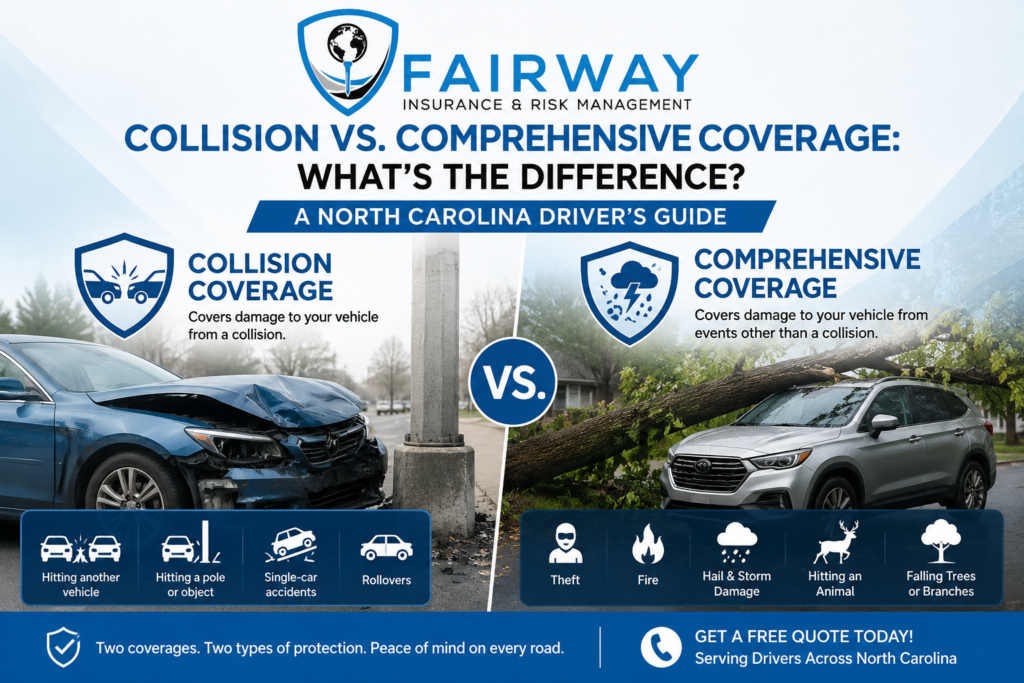
Collision coverage pays to repair or replace your vehicle if it’s damaged in a collision, regardless of who is at fault.
This coverage applies when your vehicle collides with:
- Another vehicle
- A tree
- A guardrail
- A fence
- A building
- A utility pole
- Any other object
It also covers situations where your vehicle rolls over.
Example:
You’re driving through Cary when another vehicle runs a stop sign. Even if you’re not at fault, collision coverage can help pay to repair your car after your deductible.
Another example is accidentally backing into a mailbox or hitting a parking garage pillar. Collision coverage would typically apply.
What Is Comprehensive Coverage?
Comprehensive coverage protects your vehicle from damage caused by events other than a collision.
Think of it as protection against many of life’s unexpected events.
Comprehensive coverage may help pay for damage caused by:
- Theft
- Vandalism
- Fire
- Falling trees or branches
- Hail
- Windstorms
- Flooding
- Hurricanes
- Tornadoes
- Broken windshields
- Hitting a deer or other animal
Example:
A large tree limb falls on your vehicle during a North Carolina thunderstorm. Comprehensive coverage may help pay for the repairs after your deductible.
If your vehicle is stolen or damaged by hail, comprehensive coverage generally applies as well.
Collision vs. Comprehensive: Quick Comparison
| Collision Coverage | Comprehensive Coverage |
|---|---|
| Covers accidents involving your vehicle | Covers non-collision events |
| Hitting another car | Theft |
| Hitting a pole or guardrail | Fire |
| Single-car accidents | Vandalism |
| Rollovers | Storm damage |
| Backing into an object | Falling trees |
| Accident-related damage | Animal collisions |
What Isn’t Covered?
Neither collision nor comprehensive coverage typically pays for:
- Normal wear and tear
- Mechanical breakdowns
- Engine failure due to lack of maintenance
- Tire wear
- Routine maintenance
- Personal belongings inside your vehicle
Other coverages, endorsements, or warranties may be needed for certain situations.
Is Collision or Comprehensive Coverage Required in North Carolina?
North Carolina law requires drivers to carry liability insurance, but collision and comprehensive coverage are generally optional.
However, if your vehicle is financed or leased, your lender will usually require both collision and comprehensive coverage until the loan is paid off.
Do You Need Both?
Many drivers choose to carry both coverages because they work together to provide broader protection.
Here’s a simple way to think about it:
- Collision covers accidents involving your vehicle.
- Comprehensive covers just about everything else that’s not a collision.
Together, they can help protect your investment from a wide range of risks.
When Might It Make Sense to Drop Collision or Comprehensive?
As your vehicle gets older, you may consider whether keeping these coverages is still cost-effective.
Some questions to ask include:
- What is my vehicle worth today?
- Could I comfortably replace or repair it myself?
- How much is my deductible?
- How much do these coverages cost each year?
If your vehicle’s value is low, paying for both coverages may no longer make financial sense. An independent insurance agent can help you evaluate your options.
North Carolina Drivers Face Unique Risks
Drivers in North Carolina deal with a variety of weather and road conditions throughout the year.
These include:
- Hurricane season
- Severe thunderstorms
- Falling trees
- Flooding
- Deer crossing rural roads
- Hail damage
- Heavy commuter traffic around Raleigh, Cary, Durham, and Charlotte
Having the right combination of collision and comprehensive coverage can provide valuable financial protection against these common risks.
Why Work with an Independent Insurance Agency?
Every insurance company evaluates risk differently, which means rates and coverage options can vary significantly.
As an independent insurance agency, Fairway Insurance works with multiple highly rated insurance carriers to help North Carolina drivers compare policies and find competitive pricing.
Whether you’re insuring a new vehicle, a family SUV, a truck, or a classic car, we’ll help you understand your options and choose coverage that fits your needs.
Get a Free Auto Insurance Review
Not sure if you have the right coverage?
The team at Fairway Insurance can review your current auto policy, explain your collision and comprehensive coverage, and compare quotes from multiple insurance companies—all at no cost and with no obligation.
If you’re looking for auto insurance in Cary, Raleigh, Hendersonville, or anywhere in North Carolina, we’re here to help.
Contact Fairway Insurance today for your free auto insurance quote and coverage review.


